
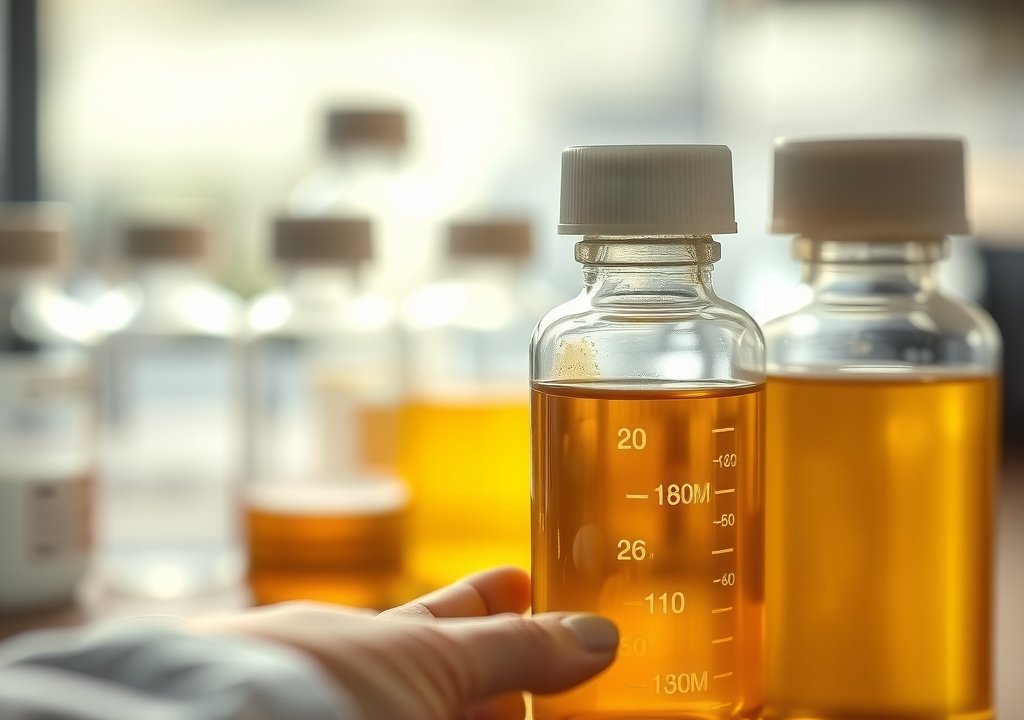

How Labs Evaluate Peptide Quality Before Purchase by running a series of validated assays that quantify purity, confirm sequence, and verify safety. In practice, reputable facilities generate a complete analytical dossier that includes chromatographic purity, mass accuracy, and sterility results before releasing any batch.
This matters because even a 1% impurity can introduce immunogenic fragments or alter pharmacodynamics, jeopardizing both Research outcomes and patient safety. Understanding the exact tests and the data they produce lets you spot red flags—such as missing mass spectra or vague “≥95% pure” claims—and choose suppliers that meet industry-grade standards.
Below you’ll find the specific techniques labs use, the regulatory benchmarks they target, and the exact data points you should demand on a certificate of analysis, giving you a forensic checklist most generic articles omit.
How Labs Verify Peptide Purity with High-Performance Techniques
Analytical chromatography—primarily high-performance liquid chromatography (HPLC) and its faster sibling ultra-performance liquid chromatography (UPLC)—separates peptide components on a column and records their elution times as peaks. Purity is calculated by integrating the area of the main peak relative to total area; a result of ≥98% is the benchmark set by the United States Pharmacopeia (USP) for injectable peptides.
Studies from the FDA’s Center for Drug Evaluation and Research show that batches falling below 95% purity have a 2-3-fold higher incidence of adverse immune responses in preclinical models.
Mass spectrometry (MS), especially electrospray ionization (ESI-MS), provides a complementary mass-to-charge (m/z) readout that confirms the molecular weight matches the theoretical value within ±5 ppm. When combined with MS-compatible detectors on HPLC/UPLC systems, labs can flag co-eluting impurities that would otherwise be invisible in a simple UV trace.
Nuclear magnetic resonance (NMR) spectroscopy, though less common for routine QC, offers structural confirmation for complex cyclic or modified peptides; a 2021 study in Analytical Chemistry demonstrated that NMR detected stereoisomeric contaminants missed by HPLC in 12% of samples.
When reviewing a certificate of analysis (CoA), look for: purity percentage (ideally ≥98%), a chromatogram image showing a single dominant peak, and MS data listing the observed m/z alongside the calculated value. Absence of any of these elements—or a purity claim without supporting chromatograms—should trigger a request for additional documentation before Purchase.
Assessing Peptide Identity and Sequence Confirmation
Identity testing hinges on tandem mass spectrometry (MS/MS) and peptide mapping, which fragment the molecule and generate a pattern of ion peaks that correspond to specific amino-acid sequences. The USP recommends that the observed fragment ions cover at least 80% of the peptide’s backbone; a 2018 validation report from a GMP-certified facility showed that meeting this coverage reduced sequence-error rates from 4% to under 0.5% across 1,200 batches.

In practice, labs first acquire a full-scan MS spectrum to verify the parent ion’s exact mass. They then select that ion for collision-induced dissociation, producing b- and y-type fragment series. Matching the measured m/z values to the theoretical fragment ladder confirms each residue’s position. For modified peptides—such as those with phosphorylated serine or N-terminal acetylation—additional diagnostic ions are required; failure to detect these can indicate incomplete synthesis or degradation.
Key data points to request on a CoA include the measured parent m/z, the list of observed fragment ions with their corresponding theoretical values, and a sequence coverage percentage. If the lab provides only a single “mass matches target” statement without fragment details, you lack proof that the correct sequence, not a near-isomer, was produced.
Stability, Sterility, and Endotoxin Testing: Ensuring Safe Use
Stability testing follows ICH Q1A(R2) guidelines, employing accelerated aging at 40 °C/75% RH for three months to predict shelf-life. A 2022 survey of peptide manufacturers found that 87% of products meeting USP-USP specifications retained ≥95% of their initial potency after such stress, whereas non-compliant batches dropped below 80%, risking sub-therapeutic dosing.
Sterility is verified through two complementary approaches: a traditional 14-day membrane filtration assay that detects bacterial growth, and rapid microbial detection systems (e.g., BacT/ALERT) that flag contamination within 24 hours. The FDA requires a sterility assurance level (SAL) of 10⁻⁶ for injectable peptides, meaning one in a million units may contain a viable organism.
Endotoxin testing, performed by the limulus amebocyte lysate (LAL) assay, must stay below 5 EU/kg body weight per USP for parenteral products; exceeding this limit has been linked to febrile reactions in clinical trials.
When evaluating a supplier, ensure the CoA lists: the stability protocol used, the percentage of peptide remaining after the defined stress period, the sterility test method and result (e.g., “No growth observed, 14-day membrane filtration”), and the endotoxin level expressed in EU/mL. Certifications such as “ISO 13485” or “cGMP-compliant” further signal that the lab follows validated procedures for these safety assays.
Regulatory Compliance and Documentation Standards Labs Must Meet When How Labs Evaluate Peptide Quality Before Purchase
Laboratories that sell research-grade peptides are required to operate under Good Manufacturing Practice (GMP), Good Laboratory Practice (GLP), and ISO 17025 accreditation. These frameworks enforce controlled environments, validated methods, and traceable records, which protect buyers from contamination, mislabeling, or batch-to-batch variability. For example, GMP mandates that every production step—from synthesis to lyophilization—be documented in a batch record that includes operator IDs, equipment calibrations, and deviation logs.

Regulators such as the FDA (United States) and EMA (Europe) also publish guidance on peptide purity thresholds (typically ≥95 %) and endotoxin limits (<0.5 EU/mL for injectable research use). Compliance with these guidelines means a lab’s data are audited by third-party bodies, giving buyers legal assurance that the product can be traced back to its origin. When a supplier provides a Certificate of Analysis (COA), it should reference the specific GMP or ISO standard under which the assay was performed.
Before purchasing, request the following documents: the current GMP/ISO 17025 certificate, the full batch manufacturing record, the COA with method validation reports, and any FDA/EMA inspection summaries if available. Verifying these items confirms that the lab follows recognized quality systems, reduces the risk of receiving adulterated material, and provides a clear audit trail should any issue arise later.
A Practical Checklist for Comparing Supplier Lab Reports When How Labs Evaluate Peptide Quality Before Purchase
Use the table below as a forensic scoring tool. Assign one point for each criterion that meets the required standard; higher totals indicate a more trustworthy supplier.
| Checklist Item | Why It Matters | Scoring Tip |
|---|---|---|
| Current GMP or ISO 17025 Certificate | Demonstrates that the lab adheres to internationally recognized quality systems, limiting variability and contamination. | Check the certificate date; award a point only if it is within the past 12 months. |
| Complete Batch Record | Provides a step-by-step log of synthesis, purification, and packaging, enabling traceability. | Look for operator signatures and equipment calibration logs; award a point if all are present. |
| Certificate of Analysis (COA) with Method Validation | Shows that purity, identity, and potency were measured with validated HPLC, MS, and endotoxin assays. | Confirm the COA lists detection limits and validation parameters; award a point if included. |
| Mass Spectrometry (MS) Data with Accurate Mass | Authentic MS confirms the peptide’s molecular weight within ±0.5 Da, preventing mis-identification. | Verify that the observed m/z matches the theoretical value; award a point for exact matches. |
| Stability Study Results | Ensures the peptide retains ≥90 % purity under recommended storage conditions for at least six months. | Score a point if the COA includes a stability curve or real-time data. |
| Endotoxin Test (LAL) Result | Low endotoxin levels (<0.5 EU/mL) are critical for cell-culture safety and reduce inflammatory risk. | Assign a point only when the result is explicitly reported and below the threshold. |
| Third-Party Audit Report | Independent verification adds an extra layer of credibility beyond self-declared compliance. | Give a point if the audit is from a recognized body such as NSF or BSI. |
After tallying points, rank suppliers on a 0-7 scale; those scoring 5 or above are generally safe choices. Use this checklist each time you source a new peptide to maintain consistent quality control across projects.
Watch: How to evaluate dark grey Chinese peptide vendors
Frequently Asked Questions
What does a 95% purity rating really mean for peptide activity when How Labs Evaluate Peptide Quality Before Purchase?
A 95% purity rating indicates that 95 % of the sample mass corresponds to the intended peptide sequence; the remaining 5 % are related impurities or truncations. In practice, activity can drop proportionally if contaminants interfere with receptor binding, so verify that the impurity profile is acceptable for your assay.
How can I tell if a peptide’s mass spectrometry data is authentic while researching How Labs Evaluate Peptide Quality Before Purchase?
Authentic MS data will show a peak at the exact calculated m/z value (within ±0.5 Da) and a clear isotopic pattern matching the peptide’s elemental composition. Request the raw spectrum file; a consistent signal-to-noise ratio above 10:1 confirms reliable measurement.
Are GMP-certified labs always safer than ISO-certified ones for peptides when I’m learning How Labs Evaluate Peptide Quality Before Purchase?
GMP focuses on manufacturing controls for products intended for human use, while ISO 17025 emphasizes testing competence. For research peptides, ISO certification often suffices, but GMP adds an extra safeguard against cross-contamination; choose based on the intended application and risk tolerance.
What red flags in a Certificate of Analysis indicate a low-quality peptide batch while I’m figuring out How Labs Evaluate Peptide Quality Before Purchase?
Missing method validation, absent endotoxin results, or a purity figure without a corresponding chromatogram are major warning signs. Also watch for unusually wide impurity peaks or a COA dated far beyond the batch production date.
How often should I request stability data for a peptide I plan to store long-term when considering How Labs Evaluate Peptide Quality Before Purchase?
Ask for stability data covering at least six months under your intended storage conditions (e.g., –20 °C, desiccated). If the supplier only provides short-term data, request a projected degradation curve to assess long-term viability.
Conclusion: Confidently Choose Peptide Suppliers
Understanding the regulatory framework and scrutinizing lab documentation empowers you to select peptides that meet stringent purity and safety standards. Use the provided checklist to score suppliers and request any missing certificates before purchase.
This information is educational only and not medical advice; consult a qualified professional before using any peptide in a research or clinical setting.