
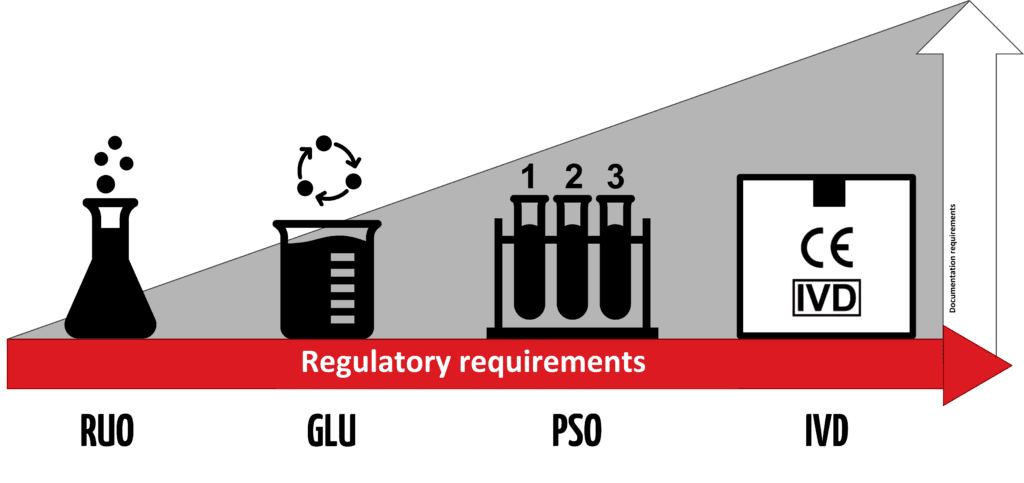

Research Use Only (RUO) labels mean products are for lab research only, not for clinical diagnosis.
I have spent years working in research labs and with biotech vendors, and I know how confusing labels like Research Use Only (RUO) can be. This article explains Research Use Only (RUO): what it means, how regulators treat it, how labs should use RUO products safely, and why the distinction matters for science, safety, and compliance. Read on for practical tips, real-life lessons, and clear guidance you can apply today.
Source: johner-institute.com
What Research Use Only (RUO) Means
Research Use Only (RUO) is a label that manufacturers add to reagents, kits, instruments, and software. It signals that the product is intended for laboratory research, not for diagnosing or treating patients. The RUO label limits how the item can be marketed and used.
Key points about Research Use Only (RUO)
- RUO products are not validated for clinical performance.
- They lack regulatory clearance for patient care.
- RUO labeling reduces manufacturer liability for clinical outcomes.
Common examples of Research Use Only (RUO) items
- Antibody reagents sold for biomarker discovery.
- Next-generation sequencing kits for method development.
- Software tools meant for data exploration, not clinical decision-making.
Experience note: early in my career, our lab received an antibody labeled RUO for exploratory work. We validated it internally for a pilot study, but we did not use it for any clinical decision. That saved us from compliance headaches.

Source: visiopharm.com
Why Research Use Only (RUO) Matters
The RUO label matters for safety, quality, and legal reasons. When a product is used outside its intended RUO scope, patient safety and data validity are at risk.
Why it matters in practice
- Patient safety: Using RUO tools in clinical settings can lead to wrong diagnoses.
- Data reliability: RUO products may lack consistent lot-to-lot performance.
- Legal and regulatory risk: Misuse can trigger enforcement and liability.
Real-world impact
- A lab once used an RUO assay in a diagnostic workflow without validation. The labs had to recall results and redo testing, which delayed care and increased costs.
- Manufacturers rely on RUO labels to limit claims. When companies market RUO items as clinical-grade, regulators may step in.
Practical takeaway: Treat Research Use Only (RUO) products as tools for learning and method development, not for patient care. Validate thoroughly if you must adapt them for clinical use.

Source: promega.com
Regulatory Landscape and How RUO Differs from IVD
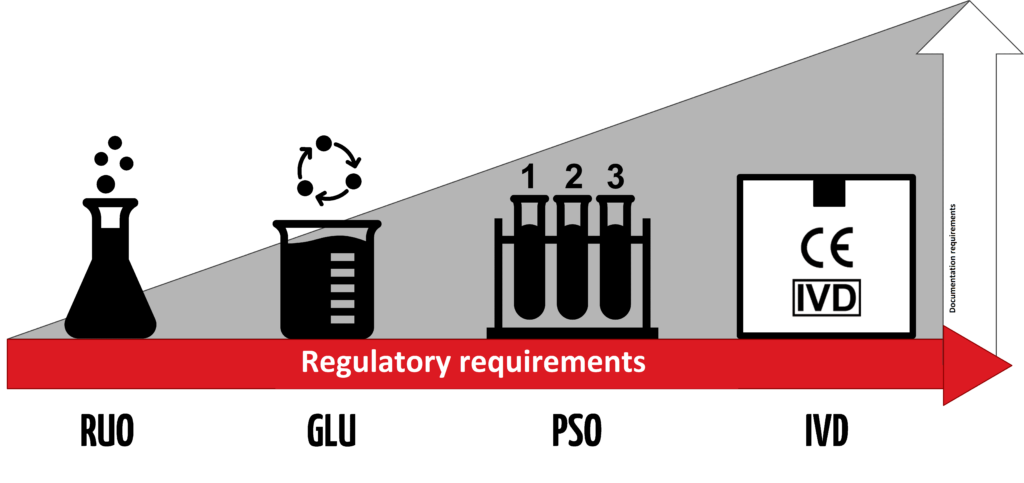
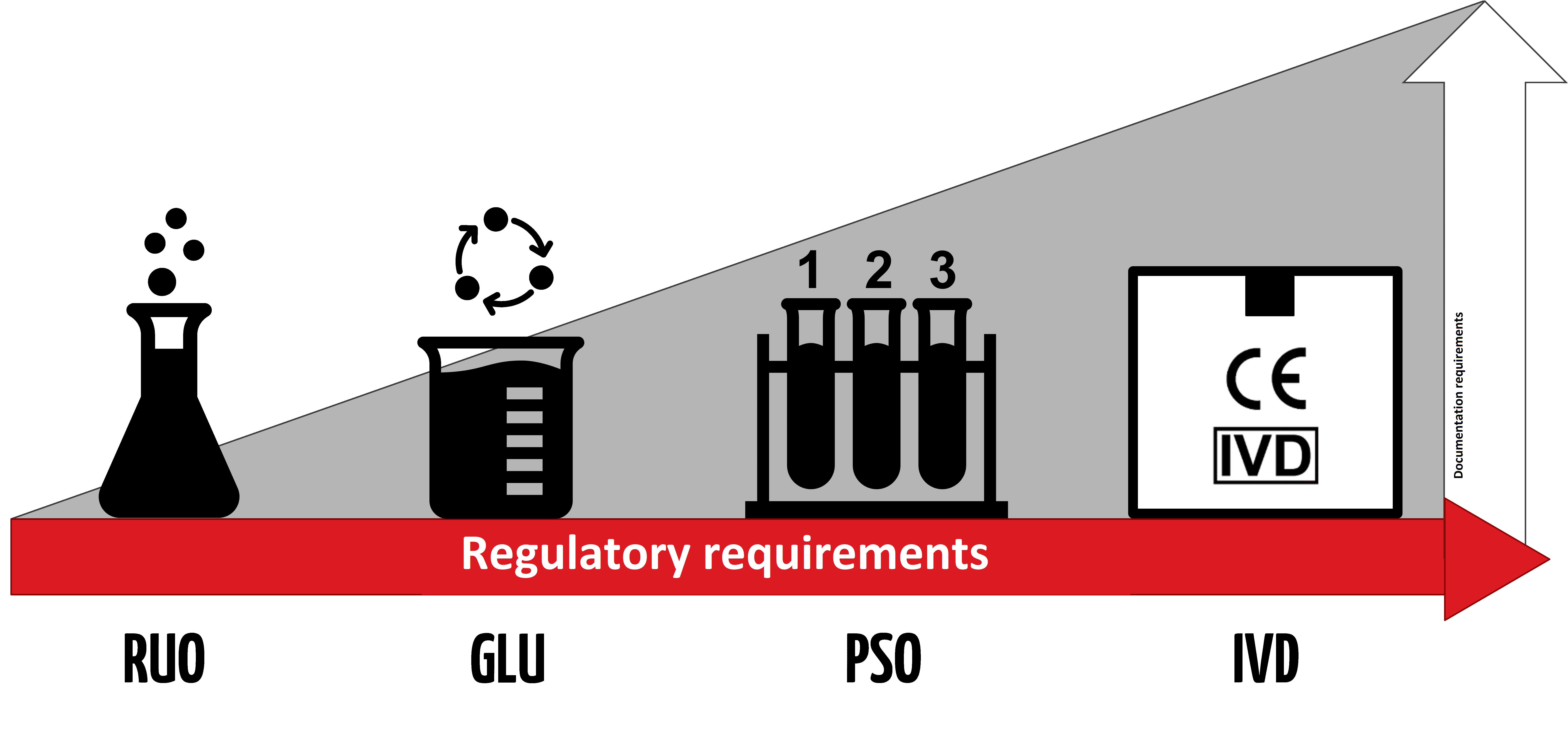
Understanding the rules helps labs stay compliant. Research Use Only (RUO) is a regulatory and marketing term. It is different from in vitro diagnostic (IVD) and emergency use authorization (EUA) labels.
How RUO compares
- RUO
- Intended for research only.
- Not reviewed or cleared for clinical use.
- IVD
- Designed and reviewed for diagnosing disease.
- Holds regulatory clearance or approval.
- EUA
- Temporary authorization during emergencies.
- May carry limited clinical use with specific conditions.
What regulators watch for
- Marketing language that implies clinical use for RUO items.
- Use of RUO products in patient testing without validation.
- Claims about performance that suggest clinical utility.
Tip: If you plan to use an RUO product in a clinical or diagnostic study, engage your compliance or regulatory team early. They can guide validation, documentation, and reporting.
Source: inovifertility.com
How to Manage and Validate RUO Products in the Lab
Handling Research Use Only (RUO) items needs clear processes. Proper documentation and validation keep results credible and protect patients.
Steps to manage RUO products
- Inventory tracking
- Keep a list of all RUO items and their labels.
- Use policies
- Define allowed uses: discovery only, method development, or preclinical research.
- Validation plan
- Design experiments to test accuracy, precision, and reproducibility.
- Record keeping
- Log validation data, lot numbers, and deviations.
Validation checklist
- Define intended use and acceptance criteria.
- Run parallel tests with clinical-grade reference methods when possible.
- Assess repeatability and reproducibility across operators and lots.
- Document results and retain raw data.
Personal tip: In my lab, we set a simple three-tier rule: RUO for discovery, RUO with internal validation for preclinical studies, and only certified IVD kits for patient testing. That rule reduced errors and audit stress.
Common mistakes to avoid
- Assuming a vendor validation equals clinical validation.
- Using RUO assays for patient management without documented validation.
- Ignoring labeling changes when new lots arrive.
Source: johner-institute.com
Examples, Use Cases, and Practical Scenarios
Seeing concrete cases helps clarify Research Use Only (RUO) use. Below are scenarios you may encounter.
Use case: Biomarker discovery
- RUO antibodies and kits help find new markers.
- Do not use these kits to report a patient’s disease status.
Use case: Method development
- Labs use RUO sequencing kits to refine workflows.
- After optimization, choose an IVD or perform rigorous validation before clinical use.
Use case: Academic collaborations
- Universities often share RUO tools in pilot studies.
- Clear agreements and informed consent are essential when patient samples are involved.
Example lesson: We once piloted a gene panel with RUO reagents. We kept the study exploratory, clearly labeled results, and used a certified lab for any patient-impacting re-tests. That transparency avoided misinterpretation.

Source: ctcd.edu
Risks, Limitations, and Ethical Considerations
RUO offers flexibility but also risks. Be honest about limits and protect patient welfare.
Key risks
- Misinterpretation of exploratory results as clinical facts.
- Liability if RUO products inform clinical actions.
- Variability in performance leading to unreliable results.
Ethical guidance
- Disclose RUO use in publications and reports.
- Obtain informed consent when patient samples are used.
- Avoid making clinical claims based on RUO data.
Regulatory caution: Labs and vendors should avoid marketing RUO products with implied clinical utility. Doing so can attract regulatory scrutiny and harm trust.

Source: verifiedpeptides.com
People Also Ask — Short Questions and Answers
What is the main difference between RUO and IVD?
- RUO is for research and not clinically validated; IVD is intended and reviewed for clinical diagnosis.
Can RUO products be used in clinical research?
- RUO products can be used in non-diagnostic clinical research if the study has proper oversight and validation procedures.
Do RUO products need validation before patient use?
- Yes. Any RUO product used to inform patient care must undergo strict validation and regulatory review.
How should vendors label RUO items?
- Labels should clearly state “Research Use Only” and avoid language suggesting diagnostic performance.
Is it legal to sell RUO products?
- Yes, but vendors must not market RUO items for clinical use or misrepresent their intended purpose.

Source: diapharma.com
Frequently Asked Questions About Research Use Only (RUO): What It Means and Why It Matters
What does Research Use Only (RUO) mean on a product label?
Research Use Only (RUO) means the manufacturer intends the product for laboratory research, not clinical diagnosis or treatment. It signals limited validation for patient care.
Can RUO products be used in a clinical lab?
RUO products can be used in clinical labs only after thorough validation and with proper approvals. Using them without validation risks patient safety and regulatory action.
How do I validate an RUO assay for a study?
Validation involves defining acceptance criteria, running comparative tests with reference methods, and documenting reproducibility and accuracy. Follow your institution’s validation protocols.
What happens if a vendor markets RUO as diagnostic?
If a vendor markets RUO products as diagnostic, regulators may investigate and require corrective actions, including relabeling or recalling products.
Should RUO results be shared with patients?
RUO results should be handled cautiously and typically should not be used for clinical decisions without confirmatory testing. Communicate limitations clearly if results are shared.
Conclusion
Research Use Only (RUO) labels protect patients and set clear boundaries for research tools. By knowing what Research Use Only (RUO) means, following validation steps, and keeping transparent records, you can use RUO products safely and productively. Treat RUO items as discovery tools, validate before clinical adoption, and communicate limits clearly. Take action now: review your lab’s RUO inventory, update validation plans, and discuss labeling and use with your team. Leave a comment, subscribe for updates, or share your RUO experiences to help others learn.