Mizan

Mizan

Common Causes of Peptide Degradation: Top Factors to Watch

Peptides have become essential in many fields, such as pharmaceuticals, biotechnology, and cosmetic science. These short chains of amino acids act as messengers, drugs, or building blocks for larger proteins. However, one big challenge with peptides is their instability. They…

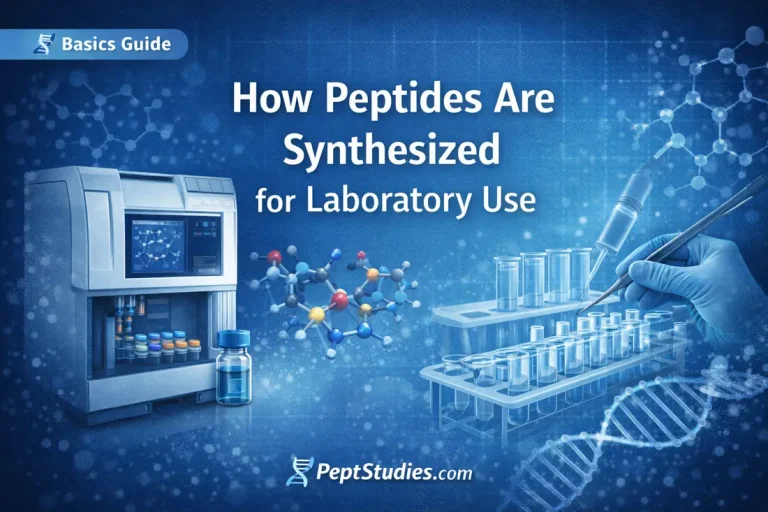
How Peptides Are Synthesized for Laboratory Use

How Peptides Are Synthesized for Laboratory Use

Peptides for laboratory use are primarily synthesized using solid-phase peptide synthesis (SPPS), a stepwise chemical method that builds amino acid chains on a solid resin support. The process involves controlled peptide bond formation through activated coupling chemistry, repeated deprotection and…

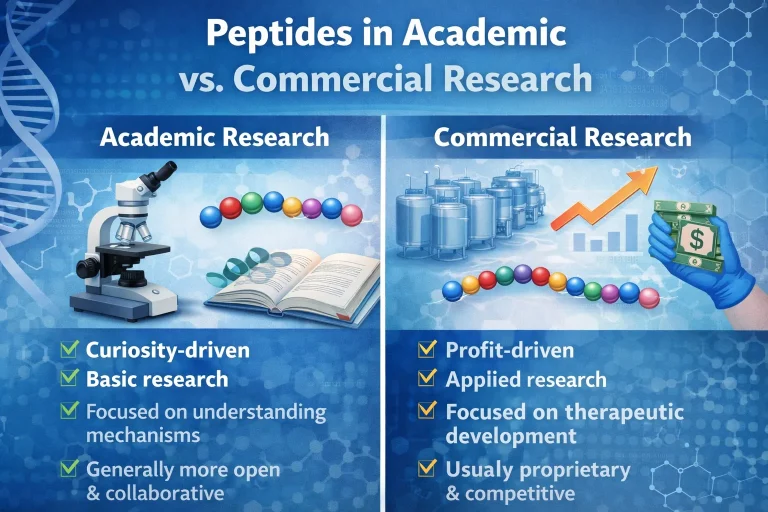
Peptides in Academic vs Commercial Research

Peptides in Academic vs Commercial Research

Have you ever wondered how tiny chains of molecules end up as medicines that help millions with diabetes, extra weight, or even cancer? That is exactly what peptides in academic versus commercial research is all about. University teams dig deep…

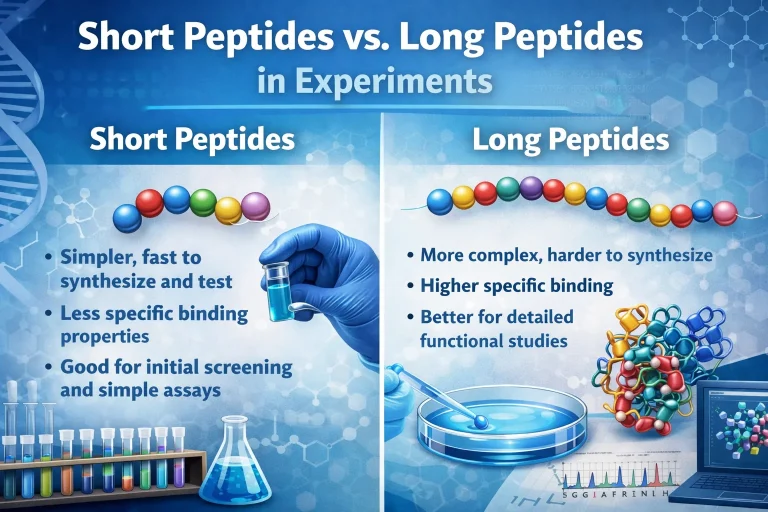
Short Peptides vs Long Peptides in Experiments

Short Peptides vs Long Peptides in Experiments

At first glance, peptide length looks like a simple number. Five amino acids. Fifteen amino acids. Thirty amino acids. What difference could it really make? In laboratory experiments, it makes a serious difference. Peptide length affects almost everything that happens…

Why Peptide Length Matters in Experimental Design

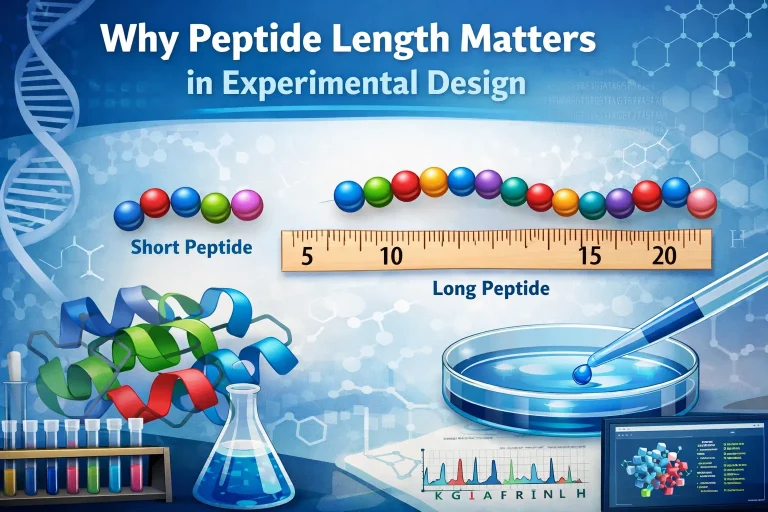
Why Peptide Length Matters in Experimental Design

Peptide length affects structure, stability, biological activity, cost, and predictability. Short peptides are flexible and easier to synthesize but less stable. Long peptides are more structured and sometimes more biologically robust, but they are harder to produce and may aggregate.…

Why Peptides Are Widely Used in Modern Research

Why Peptides Are Widely Used in Modern Research

Over the past few decades, peptide research has moved from a specialized niche to a mainstream scientific platform. This growth is not driven solely by the trend. It reflects measurable technological progress and practical experimental advantages. Historically, peptides were viewed…

Types of Peptides Used in Laboratory Studies

Types of Peptides Used in Laboratory Studies

Peptides used in laboratory studies are classified based on length, structure, function, origin, and chemical modification. The most common research categories include oligopeptides, polypeptides, linear peptides, cyclic peptides, signaling peptides, enzyme substrate peptides, antimicrobial peptides, and chemically modified peptides. Each…